Center For Integrated Nanotechnologies Highlights
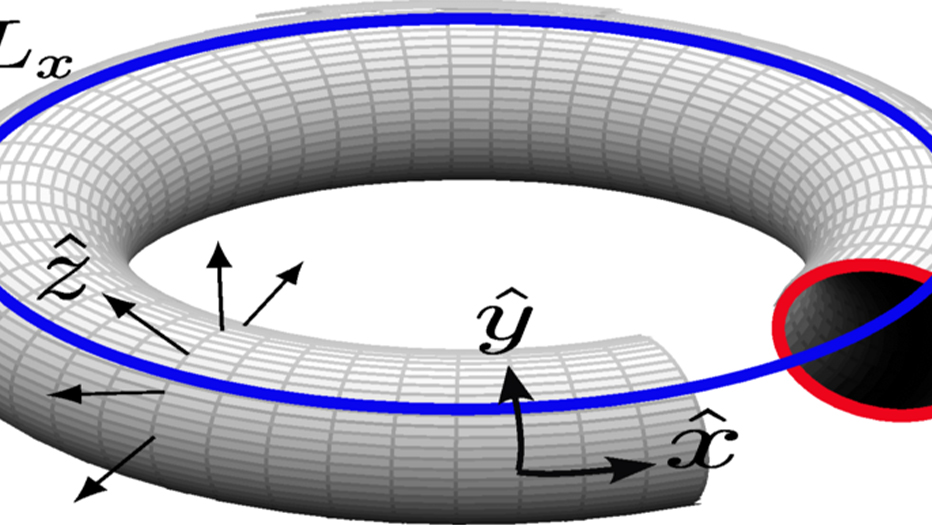
A CINT User Team identified a possible optical route to access neutral geometric excitations of fractional quantum Hall fluids, complementing recent lightscattering experiments.
Center For Integrated Nanotechnologies Highlights
Center For Integrated Nanotechnologies Highlights

In this work published in npj computational materials a CINT User Team automated the calculation of net magnetic moments and directional orientations of spin-ice configurations microscopic images.
Center For Integrated Nanotechnologies Highlights
Center For Integrated Nanotechnologies Highlights
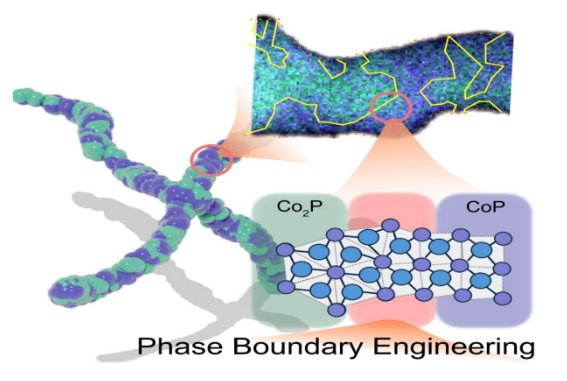
In this study, a CINT User Team showed that mixed-phase Co2P-CoP branched nanoparticles enriched with boundaries between the Co2P and CoP phases can be synthesized by controlled phosphidation of Co branched nanoparticles.
Center For Integrated Nanotechnologies Highlights
Center For Integrated Nanotechnologies Highlights
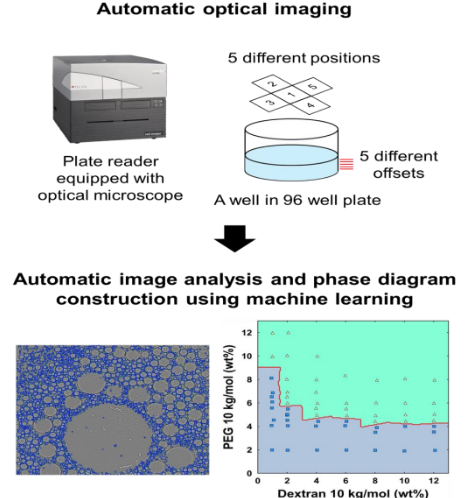
In this study published in Langmuir, a CINT User Team developed an automated methodology integrating optical microscopy and machine learning to detect microscopic phase separation and define phase boundaries.
Center For Integrated Nanotechnologies Highlights
Center For Integrated Nanotechnologies Highlights

A CINT User Team demonstrated spatiotemporally modulated metasurface (STMM) for nonreciprocal scattering, revealing a pathway to break time-reversal symmetry at thermal wavelengths for next-generation thermal radiation control.
Center For Integrated Nanotechnologies Highlights
Center For Integrated Nanotechnologies Highlights
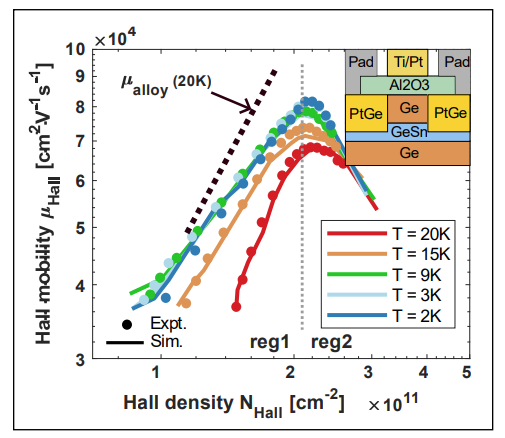
A CINT User Team achieved 4x improvement in mobility for GeSn/Ge quantum wells on a commercial 200 mm wafer platform, demonstrating reduced alloy scattering compared to similar systems.
Center For Integrated Nanotechnologies Highlights
Center For Nanoscale Materials Highlights
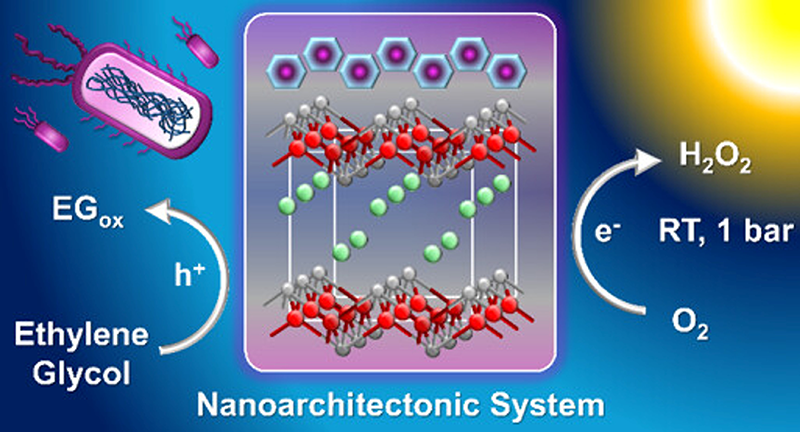
In a study published in the Journal of the American Chemical Society, researchers created a hybrid material combining bio-membranes and semiconductor nanosheets, greatly boosting hydrogen peroxide production and chemical conversion efficiency.
Center For Nanoscale Materials Highlights
The Molecular Foundry Highlights
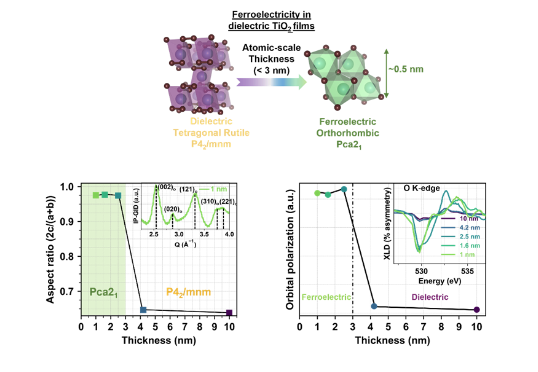
Researchers discovered that titanium dioxide films becomes ferroelectric when thinned below three nanometer, unlocking potential for next-generation energy-efficient computing chips.
The Molecular Foundry Highlights
The Molecular Foundry Highlights
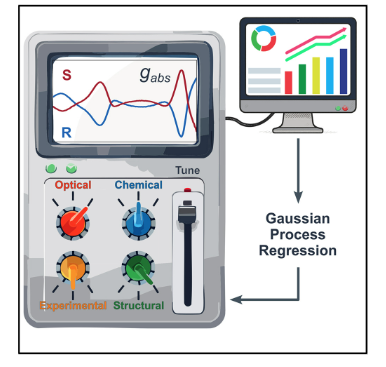
Statistical optimization of chiral 2D metal halide perovskite thin films reveals solvent choice, film thickness, and annealing temperature as key drivers of chiroptical performance.
The Molecular Foundry Highlights
Center For Integrated Nanotechnologies Highlights
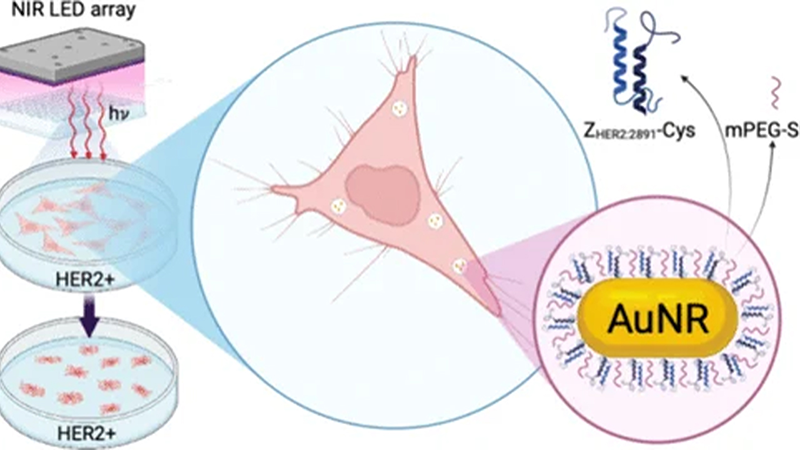
A CINT User Team modified gold nanorods with affibody molecules to drive HER2-specific cancer photothermal therapy.
Center For Integrated Nanotechnologies Highlights
Center For Nanoscale Materials Highlights
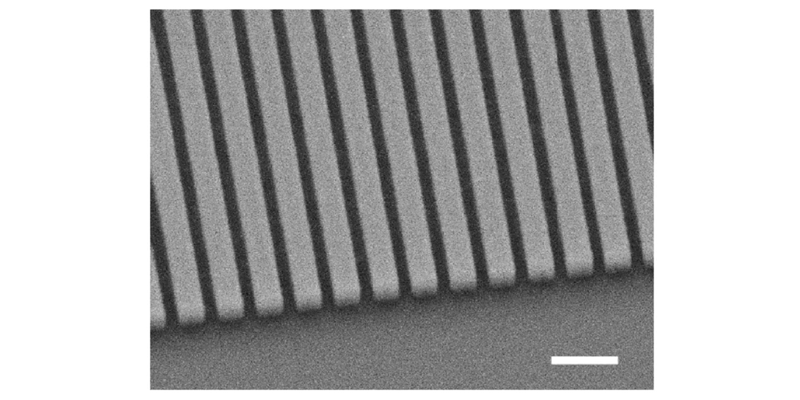
In a study published in Nature Nanotechnology, researchers achieved room-temperature supersolidity by integrating perovskite crystals with nanograting photonics, paving the way for accessible quantum technologies and exotic quantum phase exploration.
Center For Nanoscale Materials Highlights
Center For Integrated Nanotechnologies Highlights
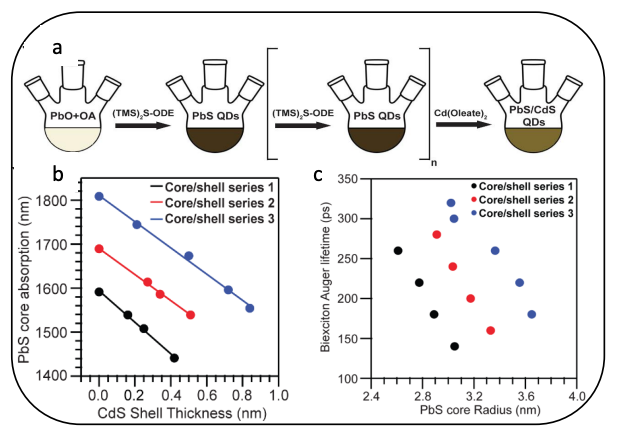
A CINT User Team refined synthetic protocol gives access to high-quality, monodisperse PbS/CdSe quantum dots (QDs) to the C- and L-telecommunications bands (1530-1625 nm).
Center For Integrated Nanotechnologies Highlights
Center For Integrated Nanotechnologies Highlights

A CINT User Team reveals how AM-induced microstructure, alloy chemistry, and temperature collectively influence irradiation damage and provides guidance for radiation-tolerant alloy design.
Center For Integrated Nanotechnologies Highlights
Center For Nanoscale Materials Highlights
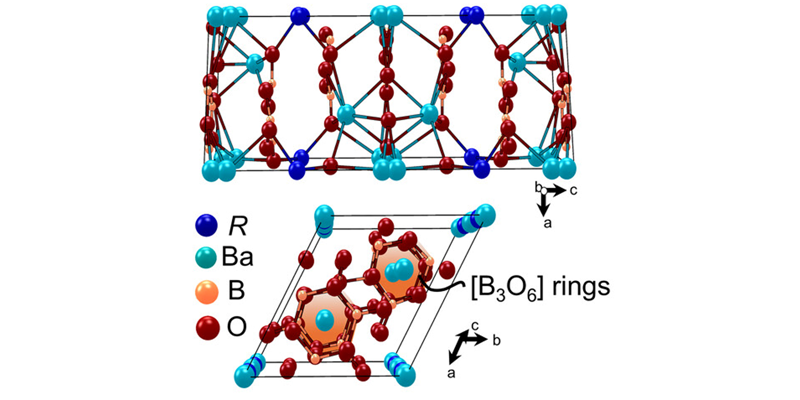
In a study published in Advanced Functional Materials, researchers synthesized high-entropy rare-earth borate crystals with enhanced optical transparency, broadband luminescence, and superior nonlinear optical properties for next-gen UV laser systems.
Center For Nanoscale Materials Highlights
Center For Functional Nanomaterials Highlights
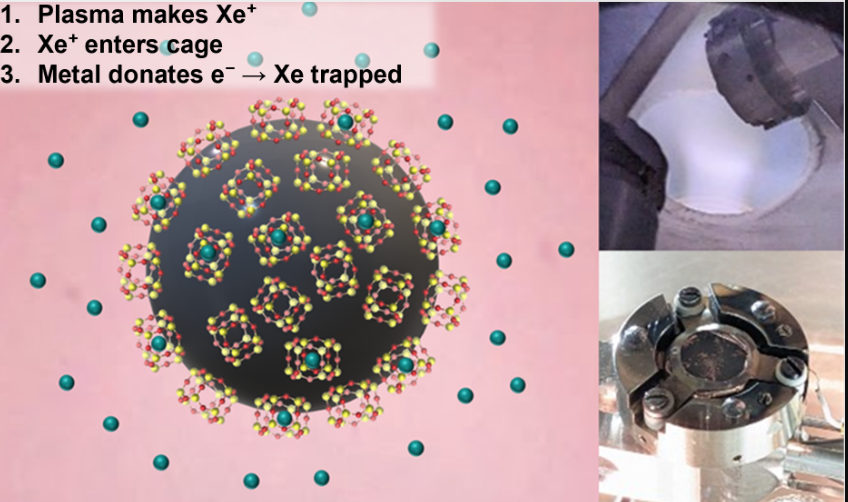
Demonstrated the trapping of xenon (Xe) atoms at room temperature in high–surface-area silica nanocages supported on metal powders using a simple plasma ionization method.
Center For Functional Nanomaterials Highlights
Center For Functional Nanomaterials Highlights
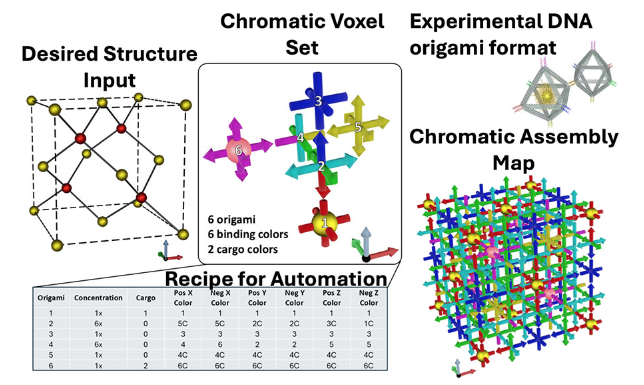
CFN researchers and collaborators developed a symmetry-mapping algorithm, MOSES, that streamlines the design of DNA voxels and can be generalized to patchy particles. These voxels are capable of self-assembling into complex three-dimensional superlattices.
Center For Functional Nanomaterials Highlights
Center For Nanoscale Materials Highlights
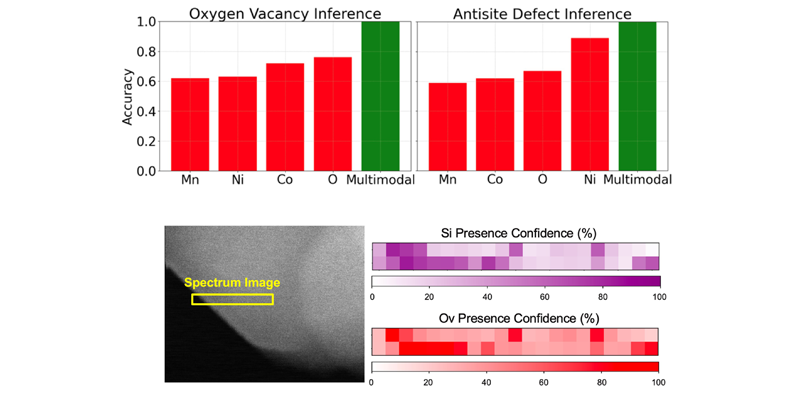
In a study published in ACS Nano, researchers developed a machine learning powered framework combining multimodal spectroscopy and simulations to characterize atomic-scale defects in battery materials, for applications in energy storage technologies.
Center For Nanoscale Materials Highlights
The Molecular Foundry Highlights
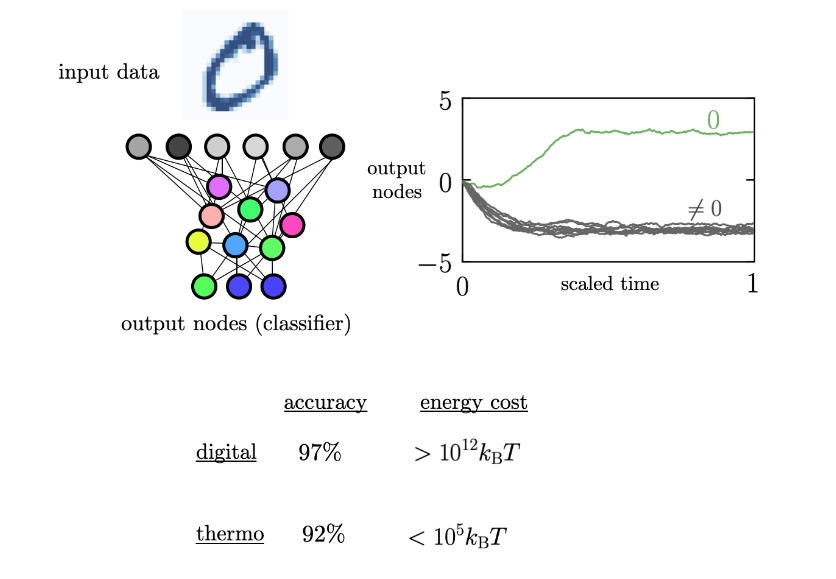
We developed computational methods to train thermodynamic computers, networks of fluctuating nonlinear units, to do AI inference at designated observation times. By tuning parameters with genetic algorithms, our computational thermodynamic neurons correctly classify 93% of handwritten number samples in the MNST test set.
The Molecular Foundry Highlights
Center For Nanoscale Materials Highlights
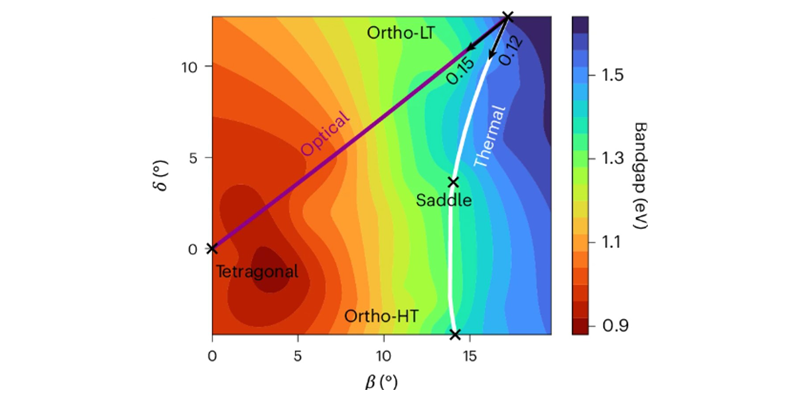
In a study published in Nature Materials, researchers showed the first optically driven Higgs mode in 2D halide perovskites, revealing how light-induced phonon dynamics transiently stabilize a tetragonal phase for advanced optoelectronic applications.
Center For Nanoscale Materials Highlights
Center For Nanoscale Materials Highlights
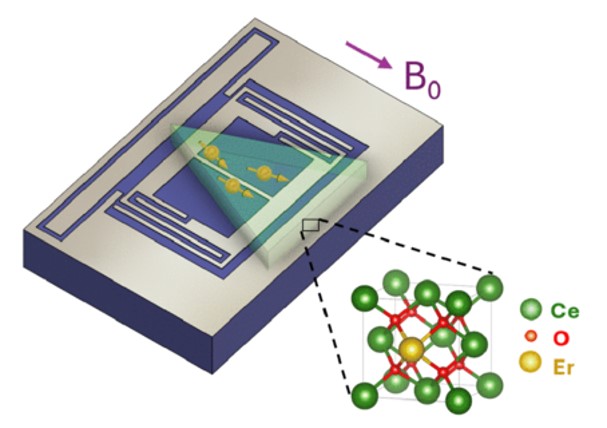
In a study published in Physical Review Letters, researchers demonstrated Er3+ spin coherence in CeO2 films on silicon, achieving up to 176.4 μs coherence times. This research paves the way for scalable quantum networks and advanced quantum technologies. Image: in box folder with title as n
Center For Nanoscale Materials Highlights
The Molecular Foundry Highlights
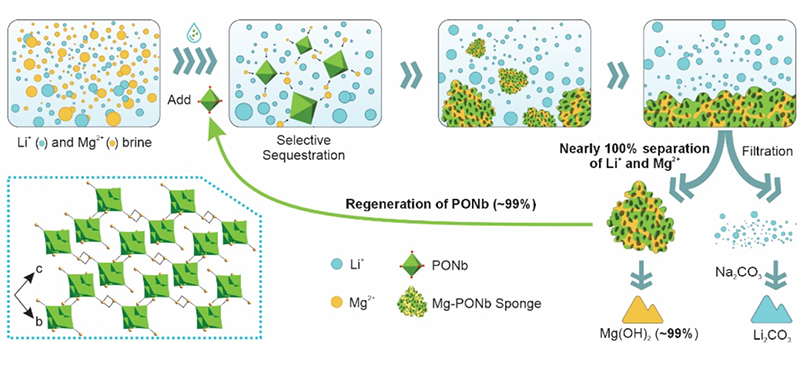
Researchers developed a new material that selectively captures magnesium ions from a Lithium-rich brine, achieving over 99.9% magnesium removal in under one minute.
The Molecular Foundry Highlights
Center For Nanophase Materials Sciences Highlights
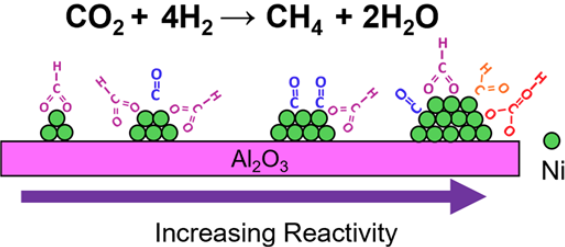
This study shows that larger nickel nanoparticles speed up $CO_2$ conversion by shifting the chemical reaction pathway, rather than by altering the catalyst's surface basicity.
Center For Nanophase Materials Sciences Highlights
Center For Nanoscale Materials Highlights
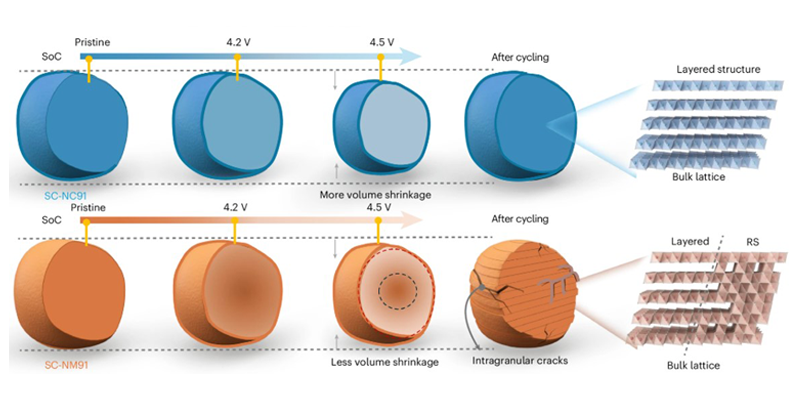
In a study published in Nature Nanotechnology, researchers uncovered how strain evolves in single-crystal Ni-rich battery electrodes, refining cobalt and manganese roles. This breakthrough paves the way for durable, high-performance lithium-ion batteries.
Center For Nanoscale Materials Highlights
Center For Nanoscale Materials Highlights
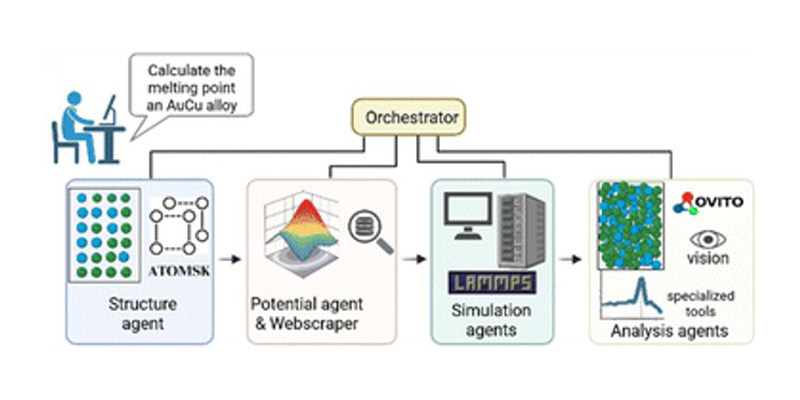
In a study published in Digital Discovery, researchers developed a multi-agent artificial intelligence framework that acts as a team of virtual experts, streamlining the use of simulations for materials discovery and design.
Center For Nanoscale Materials Highlights
Center For Nanophase Materials Sciences Highlights
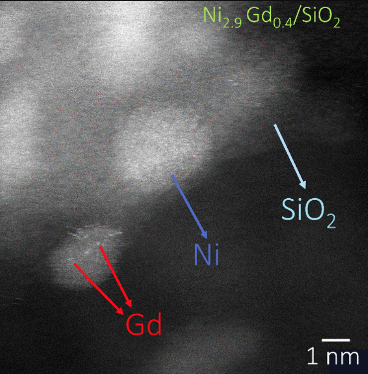
This study shows that adding gadolinium to nickel catalysts triples CO2 conversion speeds and prevents catalyst deactivation by shifting the reaction to a combined CO and formate pathway that suppresses strong CO buildup.
Center For Nanophase Materials Sciences Highlights
Center For Nanoscale Materials Highlights
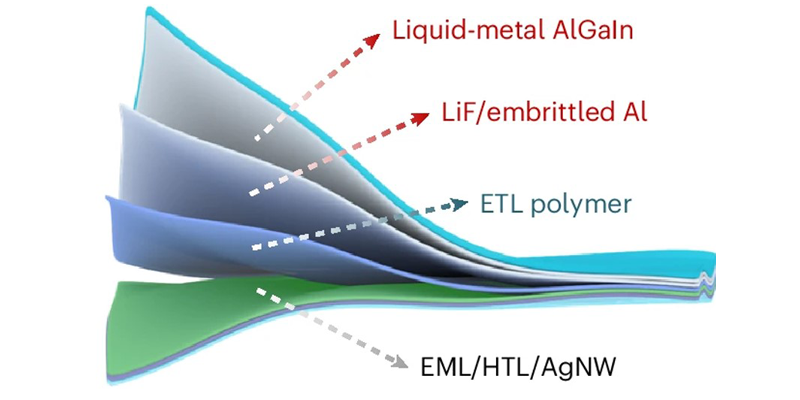
In a study published in Nature Materials, researchers built stretchable, high-performance OLEDs by innovating stretchable electron transport layers and cathodes, paving the way for high-efficiency, flexible displays in wearable and medical technologies.
Center For Nanoscale Materials Highlights
Center For Nanoscale Materials Highlights
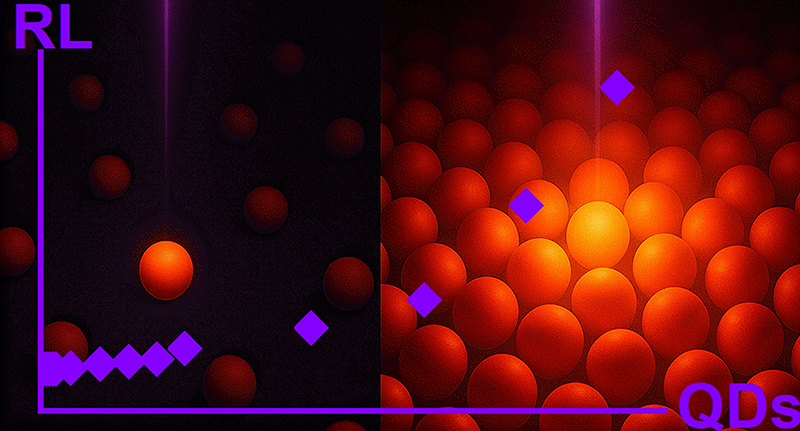
In a study published in Nano Letters, researchers demonstrated a quadratic increase in radioluminescence efficiency with quantum dot concentration for applications in nanoparticle-based scintillators in radiation detection and imaging technologies.
Center For Nanoscale Materials Highlights
The Molecular Foundry Highlights
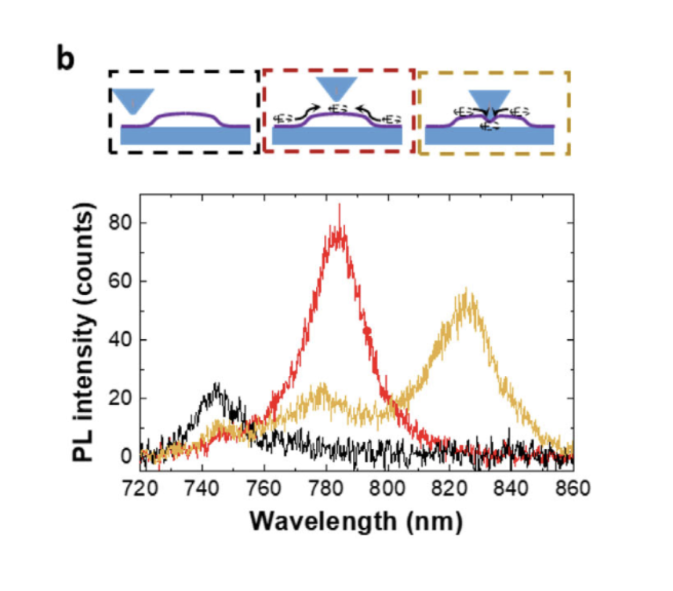
Researchers used dielectric probes to visualize and reversibly tune exciton emission inside nanoscale bubbles in WSe₂ monolayers by precisely controlling strain.
The Molecular Foundry Highlights
The Molecular Foundry Highlights
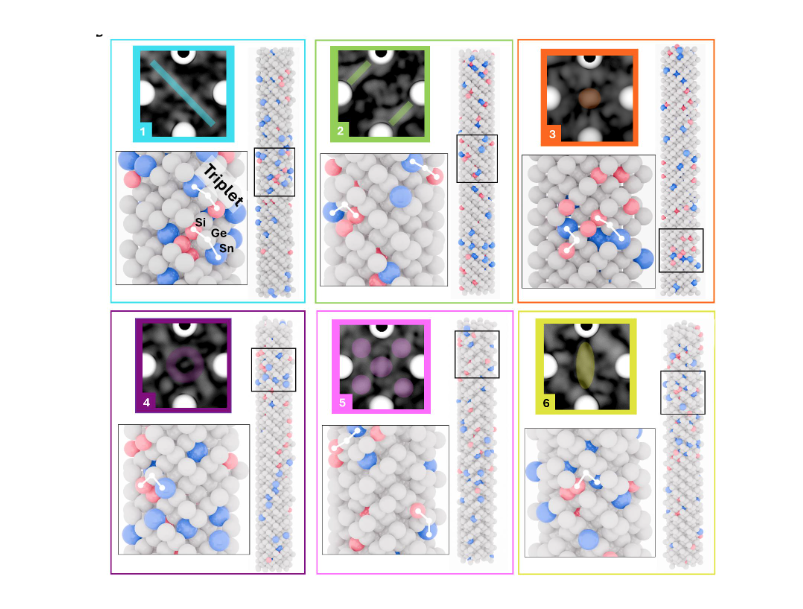
A team of researchers confirmed the presence of short-range order (SRO) in a germanium-silicon-tin semiconductor and identified the actual atomic structure of the SRO motifs.
The Molecular Foundry Highlights
The Molecular Foundry Highlights
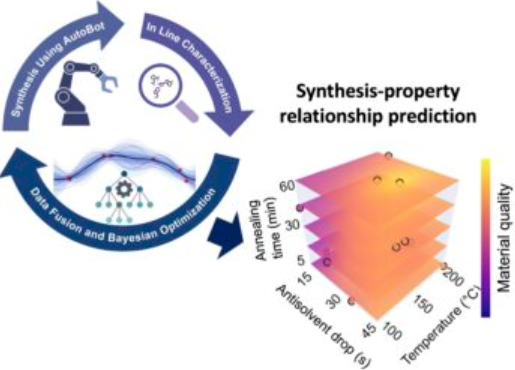
An AI-driven robotic workflow was built to accelerate experiment design and fabricate halide perovskites under less stringent atmospheric control.
The Molecular Foundry Highlights
The Molecular Foundry Highlights
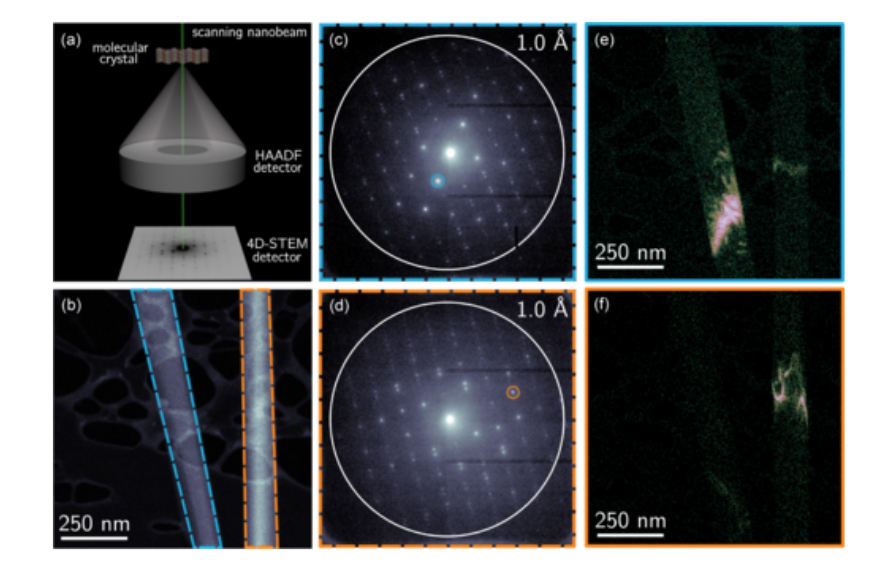
Discovery of two consequences of radiation damage. Internal structure is constantly rearranged en route to destruction and radical propagation is delocalized from initial scattering event.
The Molecular Foundry Highlights
The Molecular Foundry Highlights
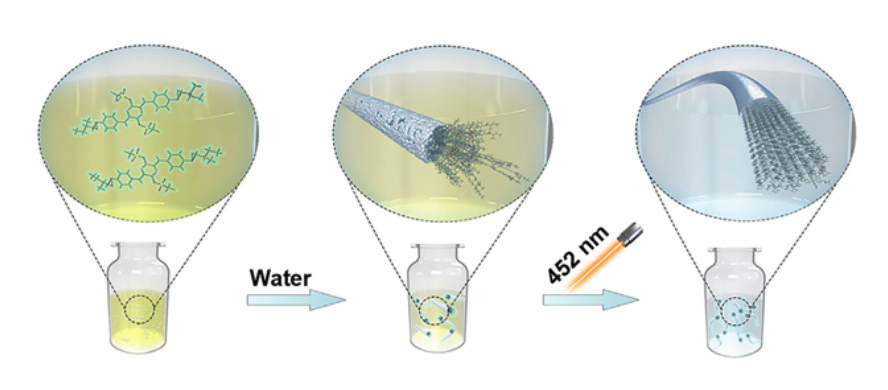
This work uncovered the mechanisms of TCP using X-rays, developed a new strategy for controlling TCP synthesis. It opens a new pathway for cost-effective polymer manufacturing.
The Molecular Foundry Highlights
The Molecular Foundry Highlights
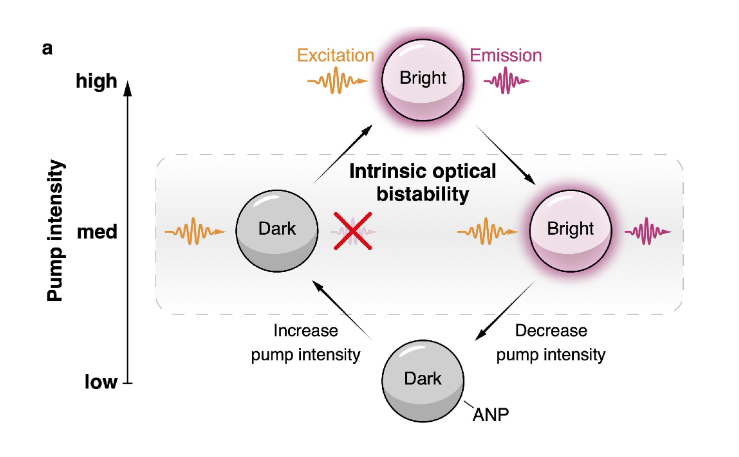
Demonstration of intrinsic optical bistability (IOB) in avalanching nanoparticles. The nanoparticles exhibit optical memory and high contrast switching between luminescent and non-luminescent states.
The Molecular Foundry Highlights
.png)