SNL Ion Beam Materials Laboratory
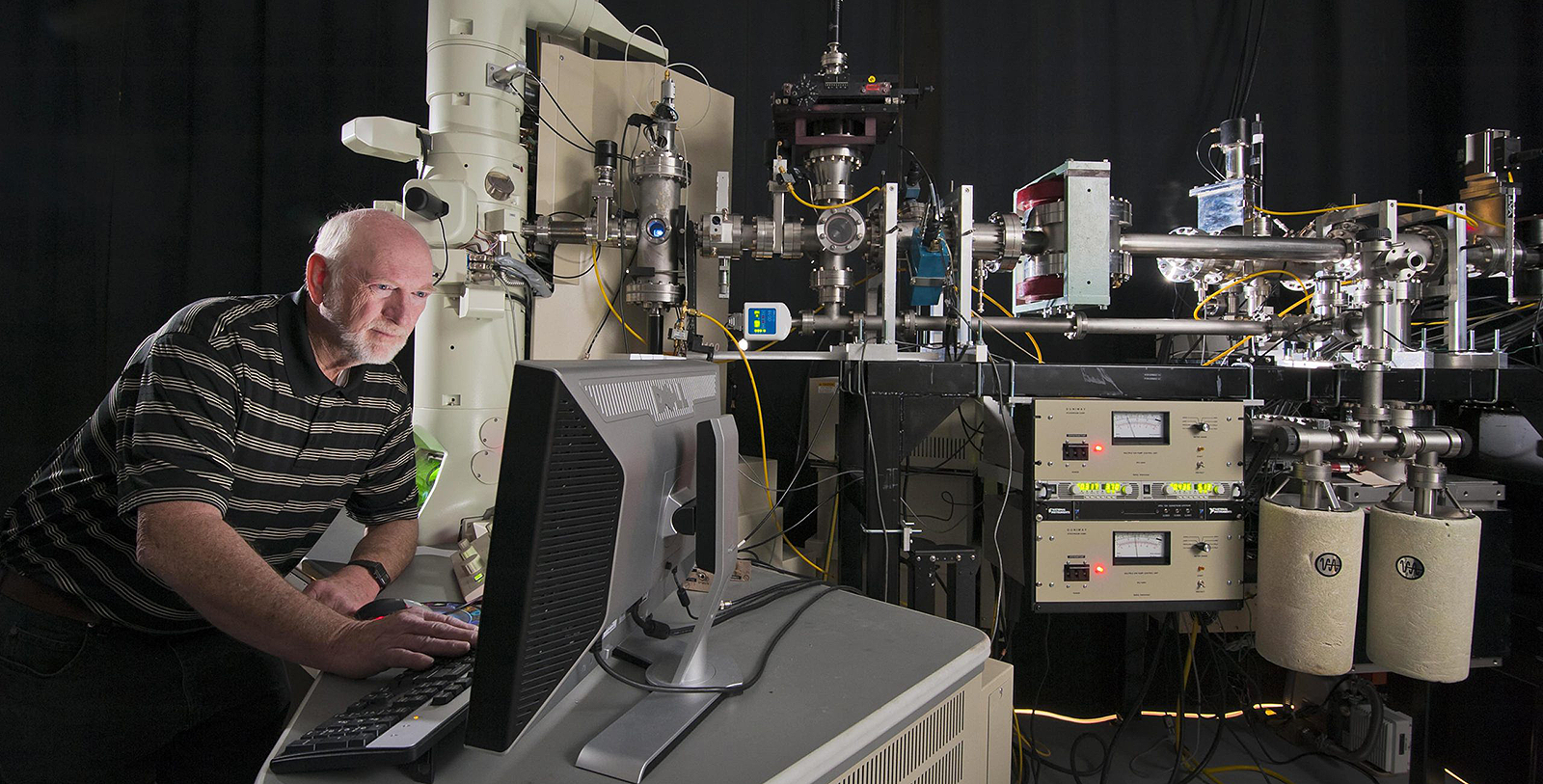
The Sandia Ion Beam Laboratory opened in 2010, enabling scientists to study and modify materials systems using ion and electron accelerators. The IBL's unique structure contains six accelerator systems capable of generating ions of every element in nature from one electron volt to 400 million electron volts, and at intensities ranging from just single ions to trillions of ions per second. One electron volt is enough to ionize a single atom or energize a single photon; 400 million electron volts will accelerate the heaviest ions to 7 percent the speed of light.
Among the uses of the building's high-energy beams is to rapidly analyze materials. A low-energy ion implantation beam then modifies them. This artificial condition helps improve predictions of the corrosion of materials used in electronic components that permeate military and civilian life. Sandia's Ion Beam Analysis (IBA) program is recognized as one of the best in the world. Here, scientists have the ability to examine a wide spectrum of materials, from semiconductors to metals and ceramics. Some of the accomplishments of the program include inventing several new ion beam analysis techniques for the quantitative analysis of light elements and heavy elements.
Capabilities and Resources
- Compositional and depth profiling of materials
- Elastic recoil detection using a high energy, heavy ion beam
- Ion channeling to probe the atomic structure of a material in the near surface
- External ion beam analysis on a variety of materials that cannot be placed in a vacuum system
- Quantitative elemental analysis using particle-induced x-ray emission with detection sensitivities
- 3-dimensional elemental distribution maps
.png)